Why Motivation Fails and Systems Work
Sheida ·

Motivation is a signal, not a schedule
Motivation can help you start, but it rises and falls with sleep, stress, workload, mood, and whatever else is competing for your attention. A plan that depends on feeling ready every time puts a decision at the hardest possible moment: the moment you're meant to begin. A system helps because it gives your intention a place in your day, a clear first action, and a way back after an interruption. Motivation still helps, and no routine fixes everything. A system just means you don't have to wait for a strong feeling before you take one small step. So instead of asking, "How can I stay motivated all month?", ask, "What would make the next action easier to start on an ordinary day?" The first question is about a mood you can't fully control. The second is about choices you can design.
Start with a reason that matters to you
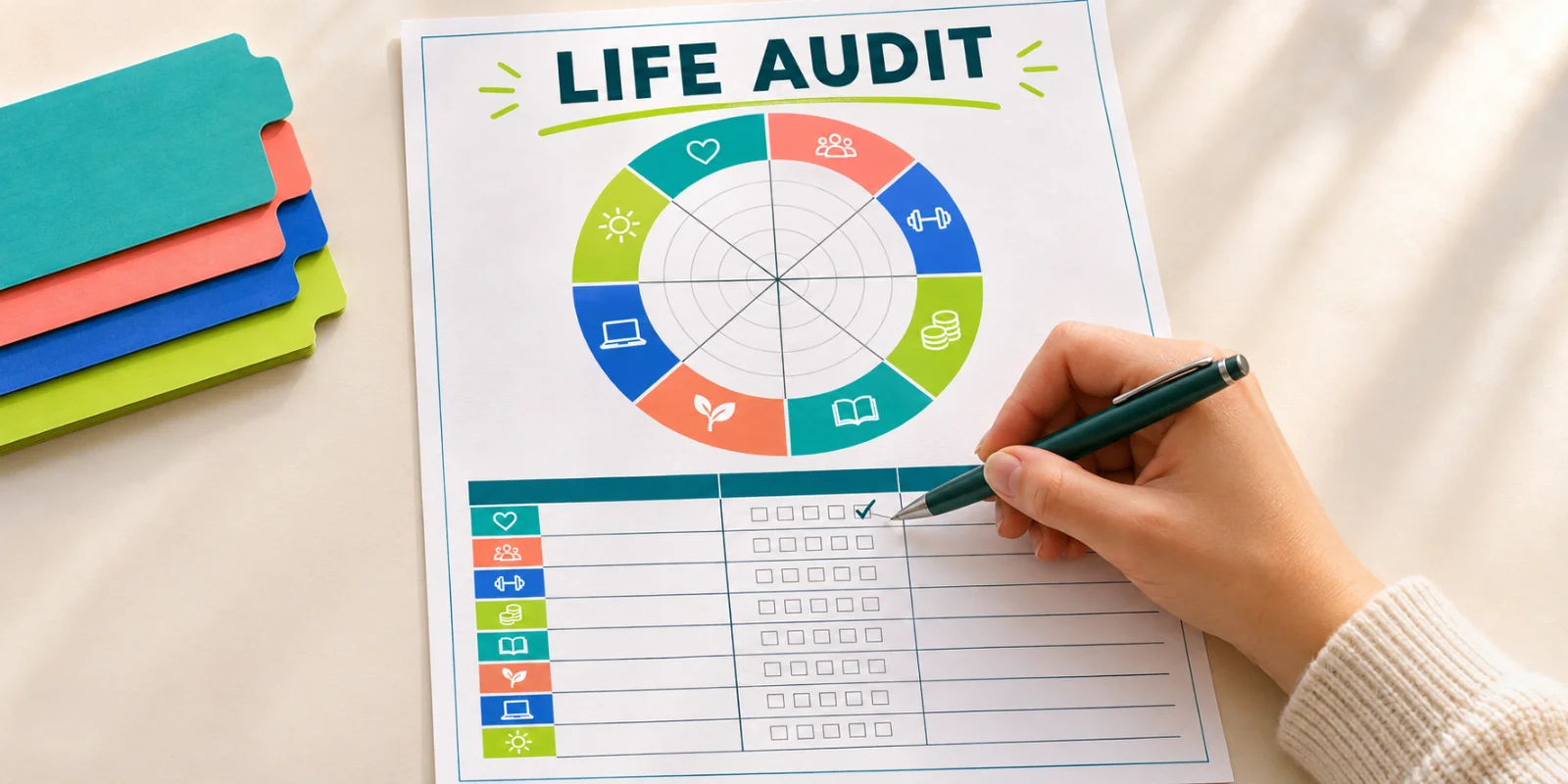
A system needs a direction. Before you pick a routine, decide why the goal matters in your life right now. "Be more productive" is hard to keep up because it doesn't say what the effort is for. "Make time to learn a skill I need for work" gives the routine a reason. The Wheel of Life guide can help you reflect on areas like health, relationships, work, and learning before you choose one priority. Keep the goal small enough to act on now, and make sure the reason is your own. A system built around someone else's expectations can turn into one more obligation you resent. When the direction is yours, it's easier to decide what belongs in the routine and what can wait. You're making one worthwhile action easier to repeat, and the rest of your life can stay as it is for now.
Turn the goal into a next action
Broad goals make it easy to put things off, because it isn't clear where to start. "Work on my portfolio" could mean researching, writing, editing, or asking for feedback. Name an action you can finish in one sitting, like "choose three projects to include" or "write the first paragraph of the case study." Then size it to the time you actually have. A good system turns your goal into a sequence of steps and shows you the next manageable one, so it never becomes a longer to-do list. If several goals compete, pick the one that matters now and give it a realistic place in your week. Our article on deciding what to do today has a way to narrow down competing priorities. Specific actions also show you whether the system is working: you can see what you started, what got in the way, and what needs to change.
Attach the action to a cue
Don't leave the timing to chance. Tie the action to a moment that comes up regularly: "After I make coffee, I'll review my Spanish notes for ten minutes," or "When my Tuesday meeting ends, I'll draft the project outline." These are implementation intentions, plans that spell out when, where, or how you'll act. A meta-analysis found that if-then plans like these help people turn goals into action across many kinds of tasks.[3] Repeating an action in the same context can also link the situation to the behaviour, so over time the cue itself can make starting more automatic.[1][2] Pick a cue that already happens in your day and an action you can realistically do there. If the cue disappears when your schedule changes, set up a backup: "If I miss the morning session, I'll do the short version after lunch." You can't plan every detail, and you don't need to. The aim is fewer decisions between you and getting started.
Make the routine easy to repeat
Design the routine for a regular day, not an ideal one. Put your materials where you'll use them, clear a small obstacle in advance, and decide on a minimum version for busy days. If you plan to study for twenty-five minutes, the minimum might be opening the lesson and answering one question. The short version keeps the habit going on demanding days, when you simply don't have much to give. Habit research shows that actions become automatic through repetition in context, and how long that takes varies from person to person. In one real-world study, missing a single opportunity didn't materially set back habit formation.[2] So plan for interruptions, and don't expect a perfect streak. Our guide to building habits without guilt when you miss a day explains how to pick back up without treating a missed day as a judgment on yourself.
Track enough to learn, then review
Choose one signal that tells you whether the routine happened: sessions started, pages read, days practised, or next actions finished. Keep the record light enough that it doesn't become a second project. A meta-analysis of 138 studies found that interventions encouraging people to monitor their goal progress improved goal attainment on average, and the effect was stronger when people recorded their progress or reported it to someone else.[4] That supports getting useful feedback. You don't need to track every minute or make your progress public. Once a week, look at the record and ask what helped, what got in the way, and whether the goal still matters. Our weekly journal review can help you turn those notes into a practical plan for the coming week. If the system isn't working, change one thing at a time: the cue, the size of the task, the time, or the amount of support.
Let the system adapt to your life
Systems work best when they're built for a real person in real conditions. If a routine keeps breaking, ask whether the task is too vague, your schedule too full, your environment too distracting, or the goal no longer right for this season. Some obstacles are outside your control, and they may need help, a conversation, or a change in expectations. Another productivity trick won't fix those. Lifous, formerly FocusCrew, puts planning, habits, focus sessions, and Notes in one place, so you can link an intention to a concrete task, a routine you repeat, and a short reflection. The tools can make the next step easier to see, and you still decide what matters and when to change the plan. Your motivation will keep rising and falling. A flexible system gives you somewhere to come back to: keep what works, change what doesn't, and choose one action to take next.
References
- Wood, W., & Neal, D. T. (2007). A new look at habits and the habit-goal interface. Psychological Review, 114(4), 843–863. https://doi.org/10.1037/0033-295X.114.4.843
- Lally, P., van Jaarsveld, C. H. M., Potts, H. W. W., & Wardle, J. (2010). How are habits formed: Modelling habit formation in the real world. European Journal of Social Psychology, 40(6), 998–1009.
- Gollwitzer, P. M., & Sheeran, P. (2006). Implementation intentions and goal achievement: A meta-analysis of effects and processes. Advances in Experimental Social Psychology, 38, 69–119.
- Harkin, B., Webb, T. L., Chang, B. P. I., Prestwich, A., Conner, M., Kellar, I., Benn, Y., & Sheeran, P. (2016). Does monitoring goal progress promote goal attainment? A meta-analysis of the experimental evidence. Psychological Bulletin, 142(2), 198–229. https://doi.org/10.1037/bul0000025