
Sheida
39 posts on the Lifous blog
FocusCrew started as a way to make focus easier. But focus is only how you begin, and what you’re really working toward is the life around it. Here’s why we renamed FocusCrew to Lifous, and why the timer, habits, and shared work now point toward what matters to you.

FocusCrew has a new name: Lifous. The planner, focus timer, habits, shared focus, and progress you know are all still here, and the product now has a wider aim: helping you build a life around what matters to you.

A perfect work-life split is hard to define and harder to keep up. Track three things instead: whether your time fits your priorities, whether you recover, and one step you take each week. Lifous, formerly FocusCrew, helps you turn that reflection into plans and habits.

A 3/10 on your Wheel of Life is a reason to get curious. Here's how to work out what the score means to you, choose one manageable action for this week, and use FocusCrew to make it easier to follow through.
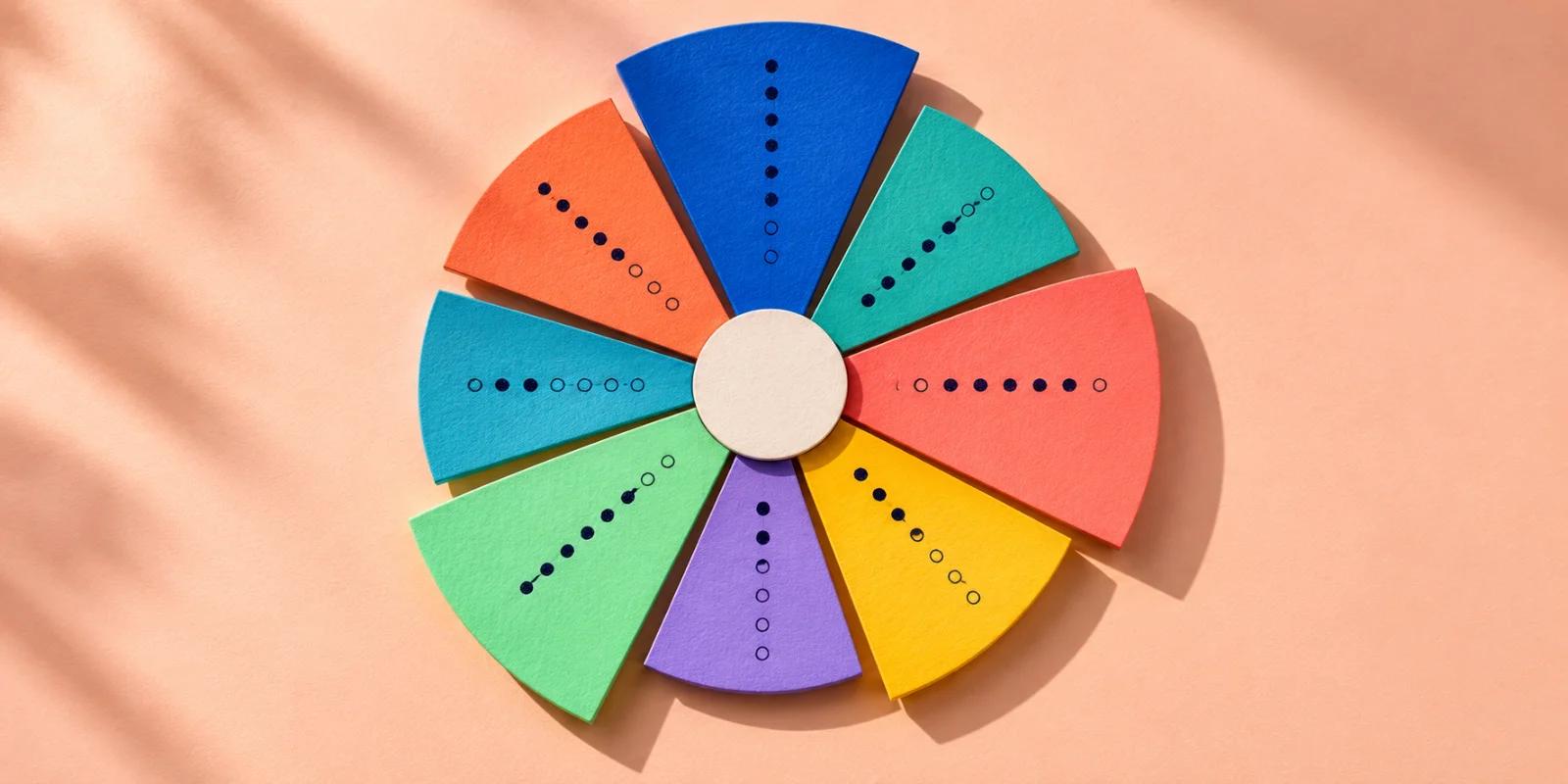
The Wheel of Life is a quick visual check-in across the main areas of your life. Here's how to rate where you stand in ten minutes, pick one next step, and use FocusCrew to act on what you notice.

Turn one page of lecture notes into a short self-testing routine with clear prompts, checked answers, and follow-up tasks.
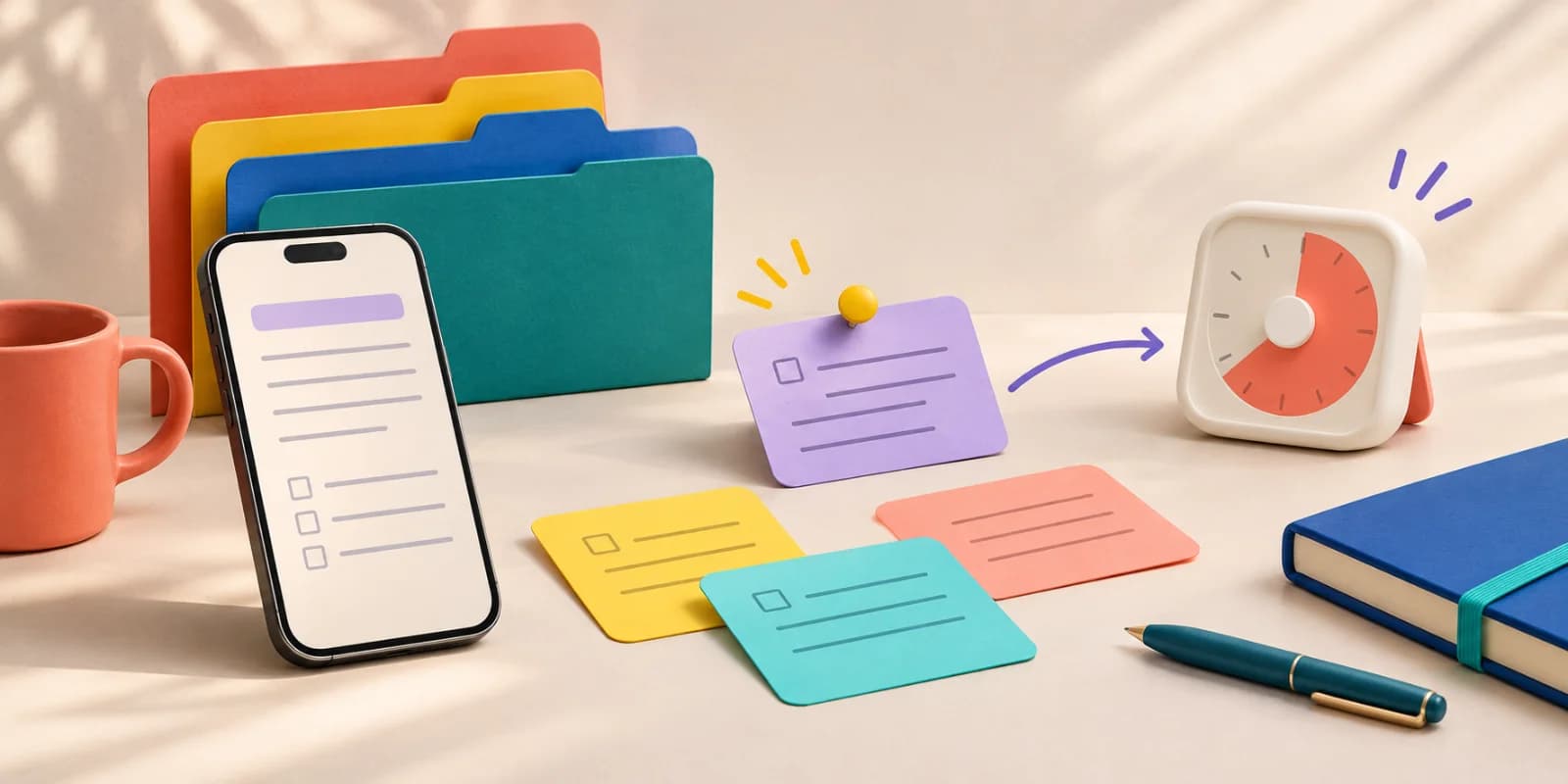
Capture ideas, organize them with folders and labels, link notes to your tasks, and keep a reference open during your focus session. A tour of FocusCrew Notes, including templates, sharing, and the PIN lock.

Pair your record of study time with small checks of recall, explanation, and application, so you can see what your sessions are actually achieving.

Build a catch-up plan around your deadlines, the gaps that later topics depend on, and the work that counts most for your next assessment.
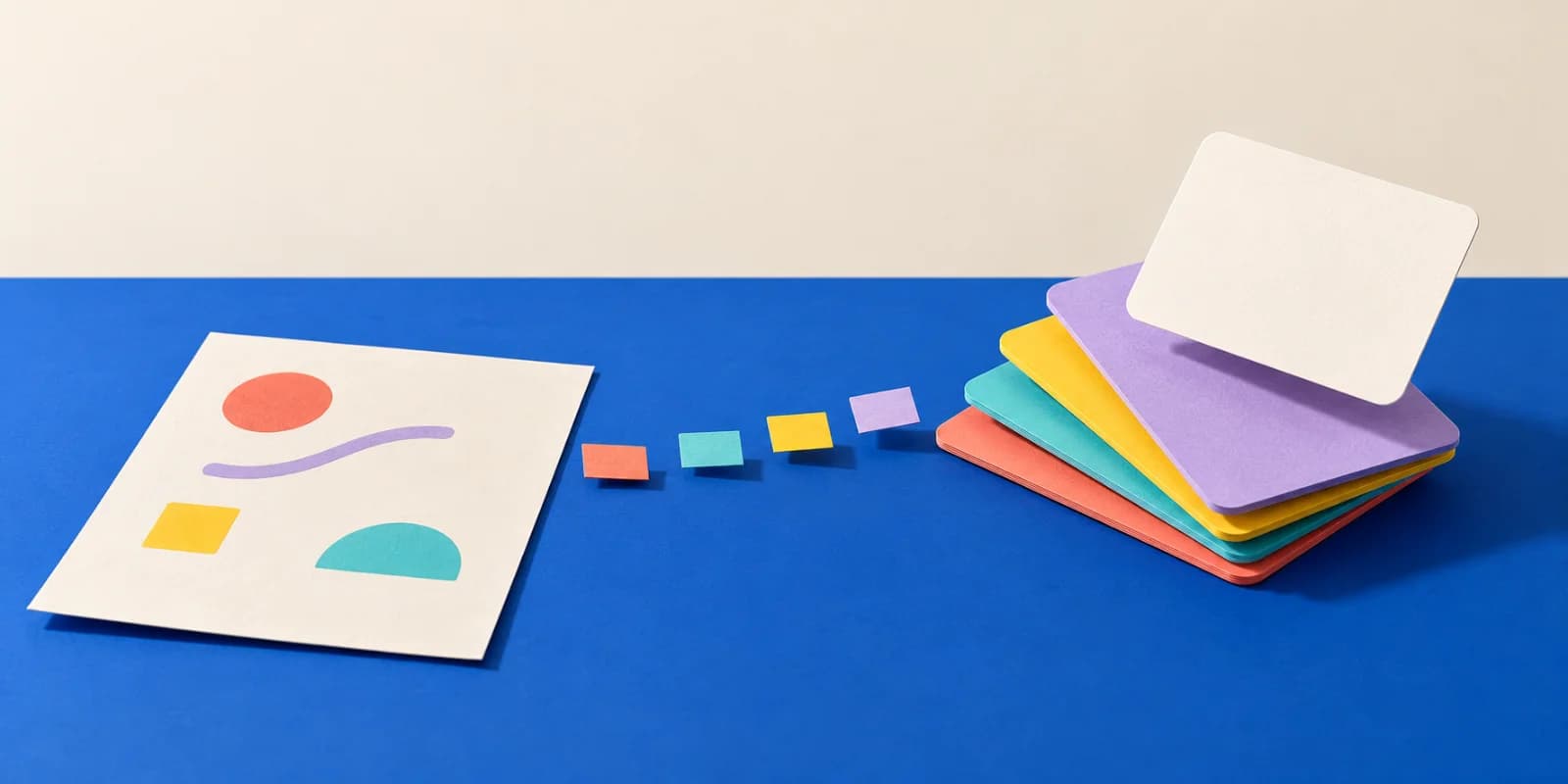
Connect an AI assistant to FocusCrew, turn a source you trust into a flashcard deck you've checked, and save it where you already study. Here's how the connector works, a prompt to start from, and what to check before you save.

Make the first decision smaller, pick one easy action, and start studying without planning the whole semester first.
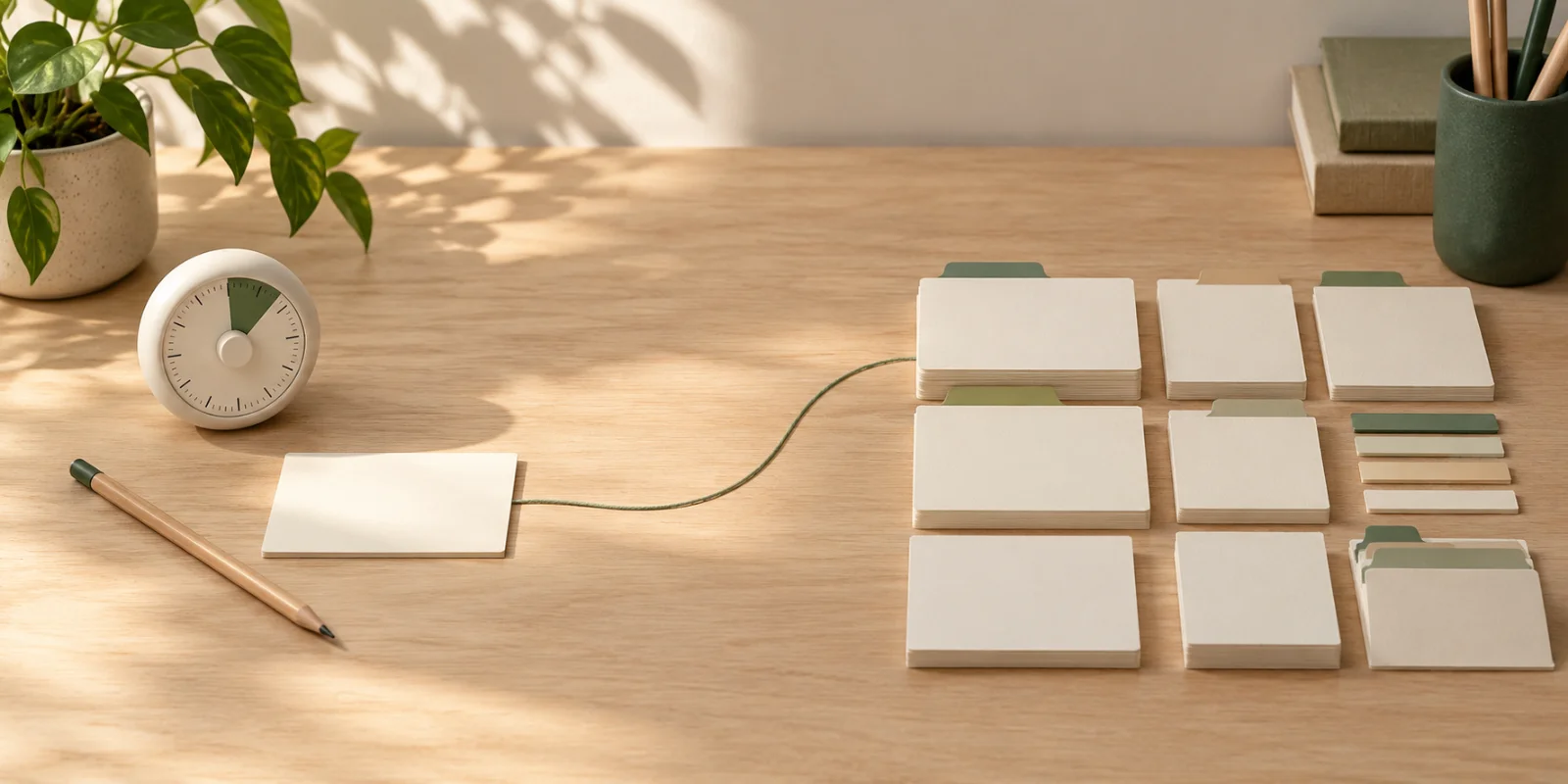
FocusCrew Notes keeps your notes next to your plans, habits, and focus sessions. Notion is a more flexible workspace for documents, databases, and team knowledge. Which one fits depends on what you want your notes to do.

Work backwards from your exam, find the topics you're weakest on, and schedule practice you can realistically do, with time left over to revise and rest.

Spread your reviews over several days with a small set of questions and a schedule loose enough to keep up with.
Start with one sentence, a familiar cue, and a simple place to write. Build a flexible journaling routine using FocusCrew Notes and Habits.
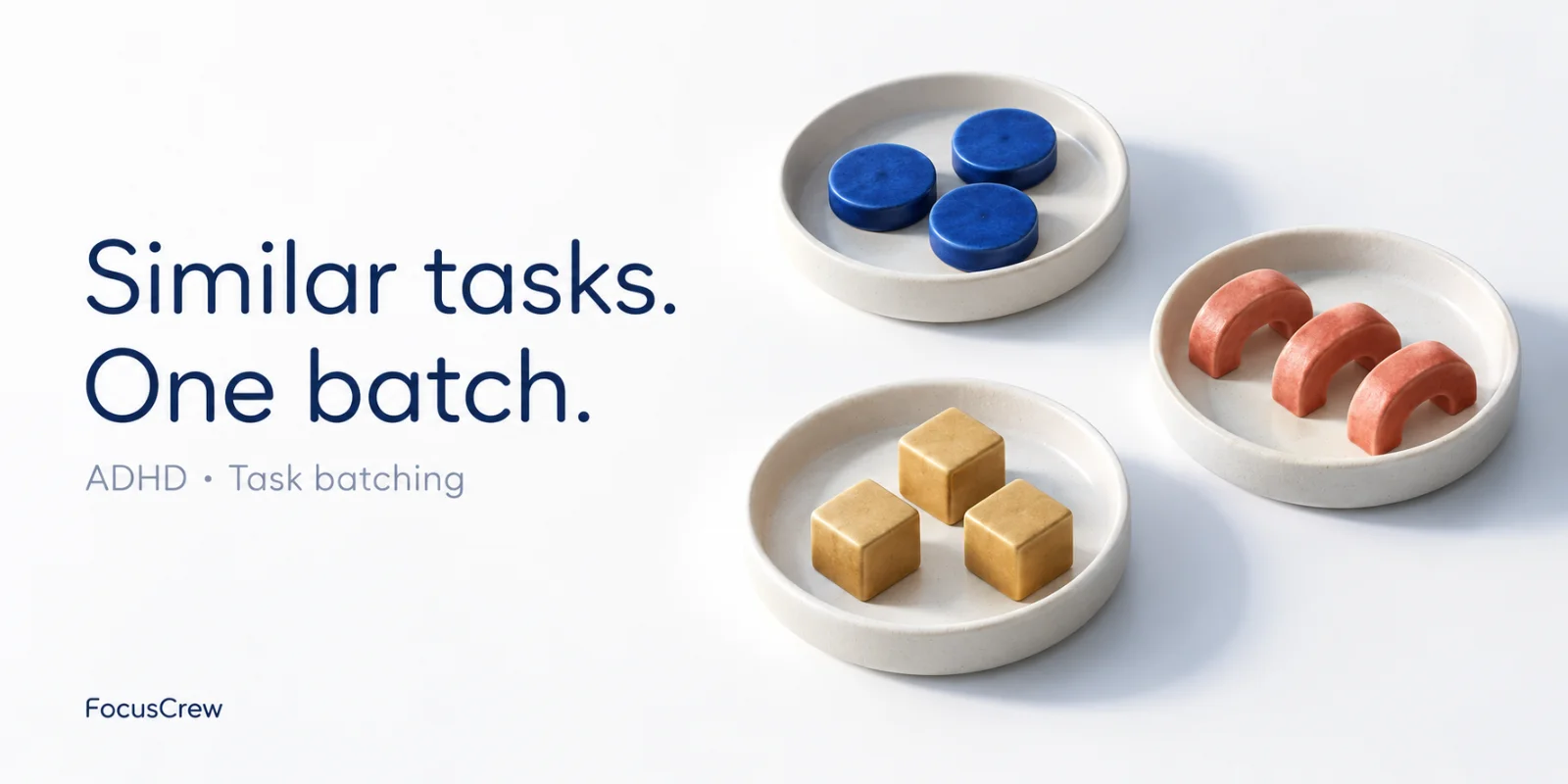
Bring planning, focused work, habits, and reflection into one routine. Discover how FocusCrew’s tools can support your day from the first decision to the final review.

FocusCrew’s community has passed 1,000 recorded focus hours. Explore what this usage milestone tells us about participation—and why member feedback still matters.
Give unfinished thoughts somewhere to land. Use FocusCrew Notes for a brief brain dump, then choose one manageable action without turning every thought into a task.
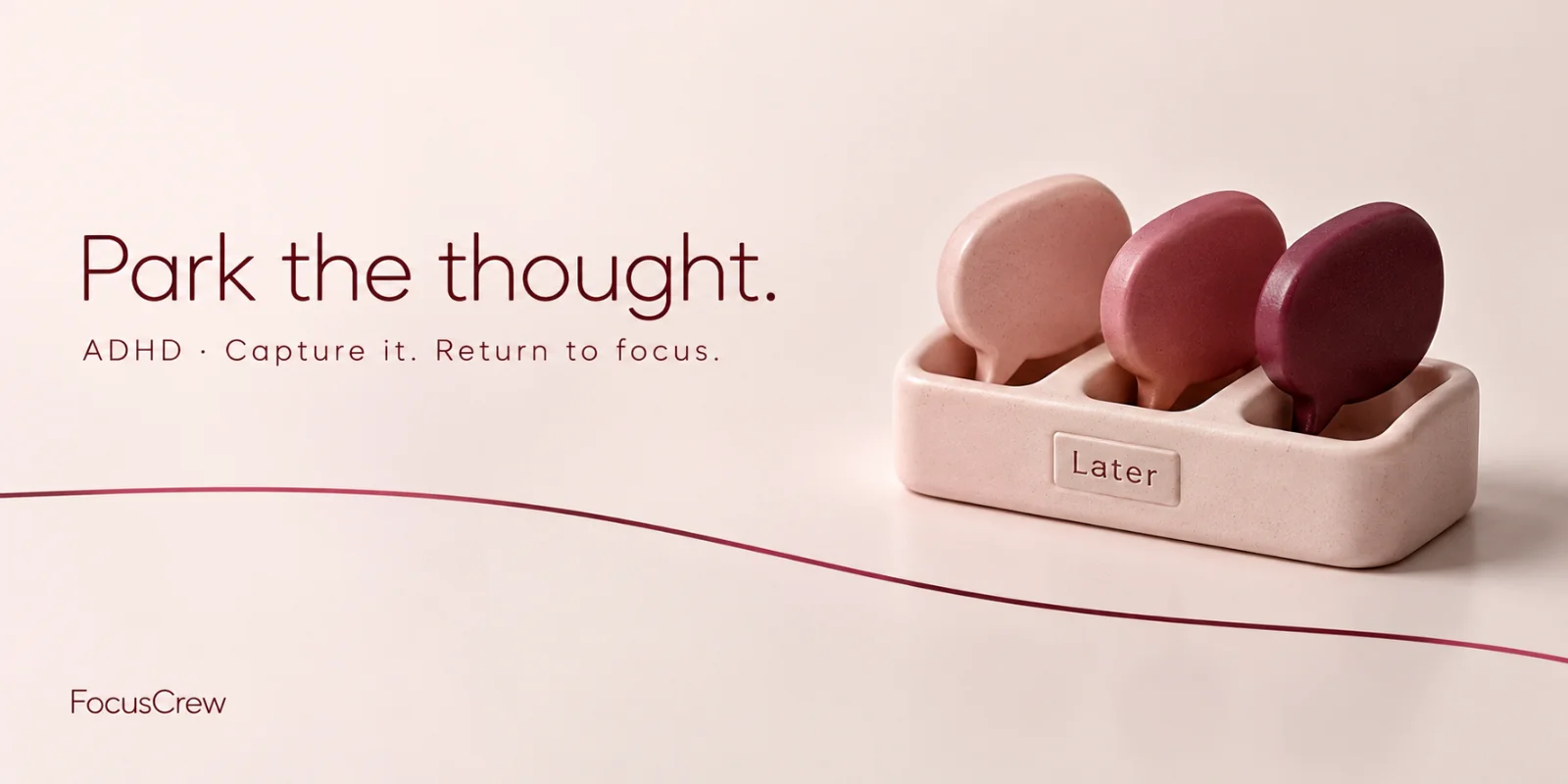
Keep a passing idea from becoming an unplanned detour. Use FocusCrew’s parking-lot technique to capture reminders briefly, return to your task, and review them later.

A to-do list shows what remains. A done list records what happened. Explore FocusCrew’s done-list technique and build a fairer, more useful picture of your day.
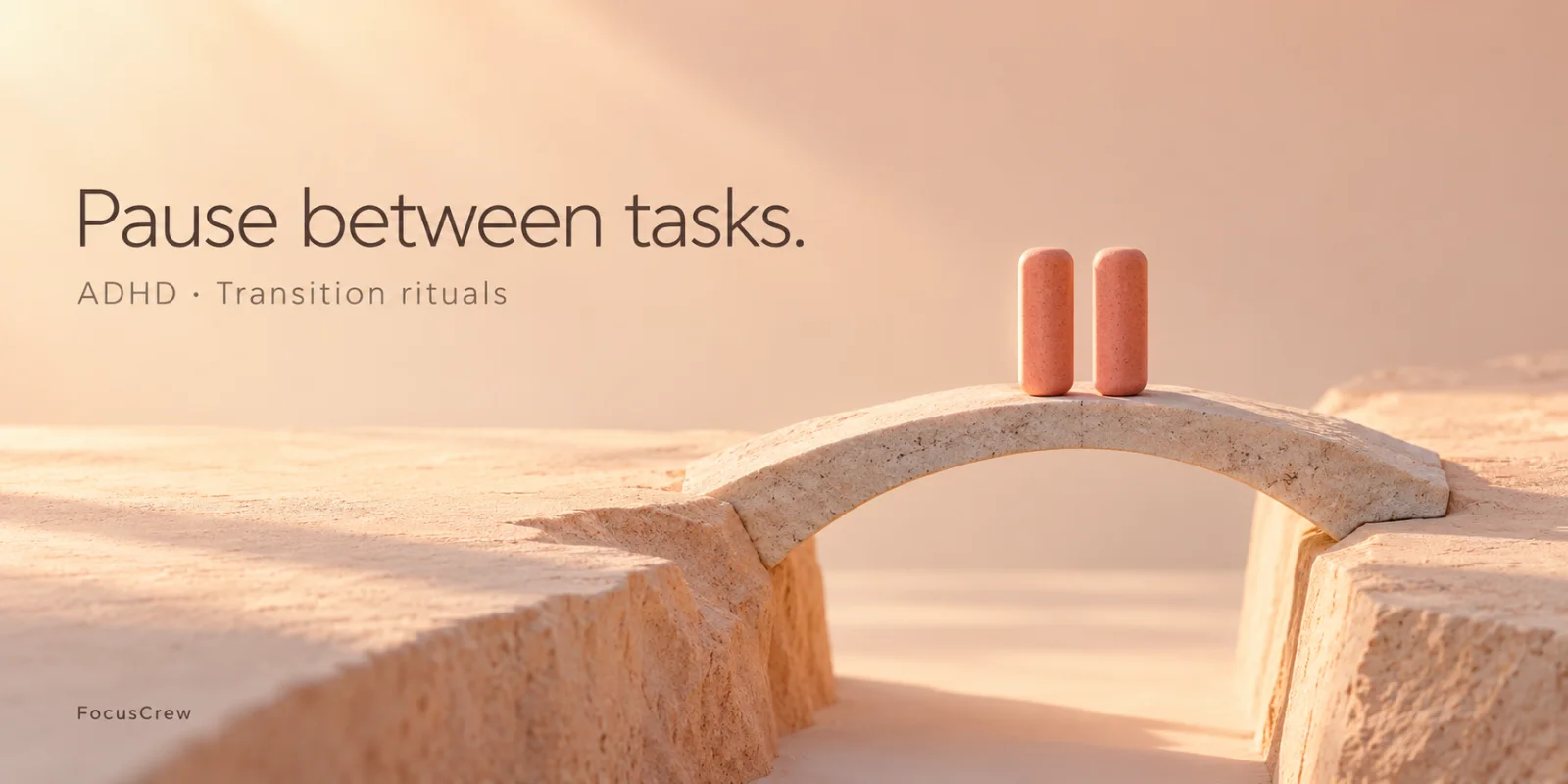
Moving between activities can take more effort than expected. Create a short transition routine with a restart note, a clear next action, and FocusCrew’s focus timer.

When starting feels overwhelming, make the first commitment smaller. Try the two-minute start from FocusCrew’s ADHD Toolbox and turn a vague task into one manageable action.

Losing track of time or underestimating tasks? Learn what ADHD time blindness means and how visible timers, realistic plans, and FocusCrew can support your daily routine.
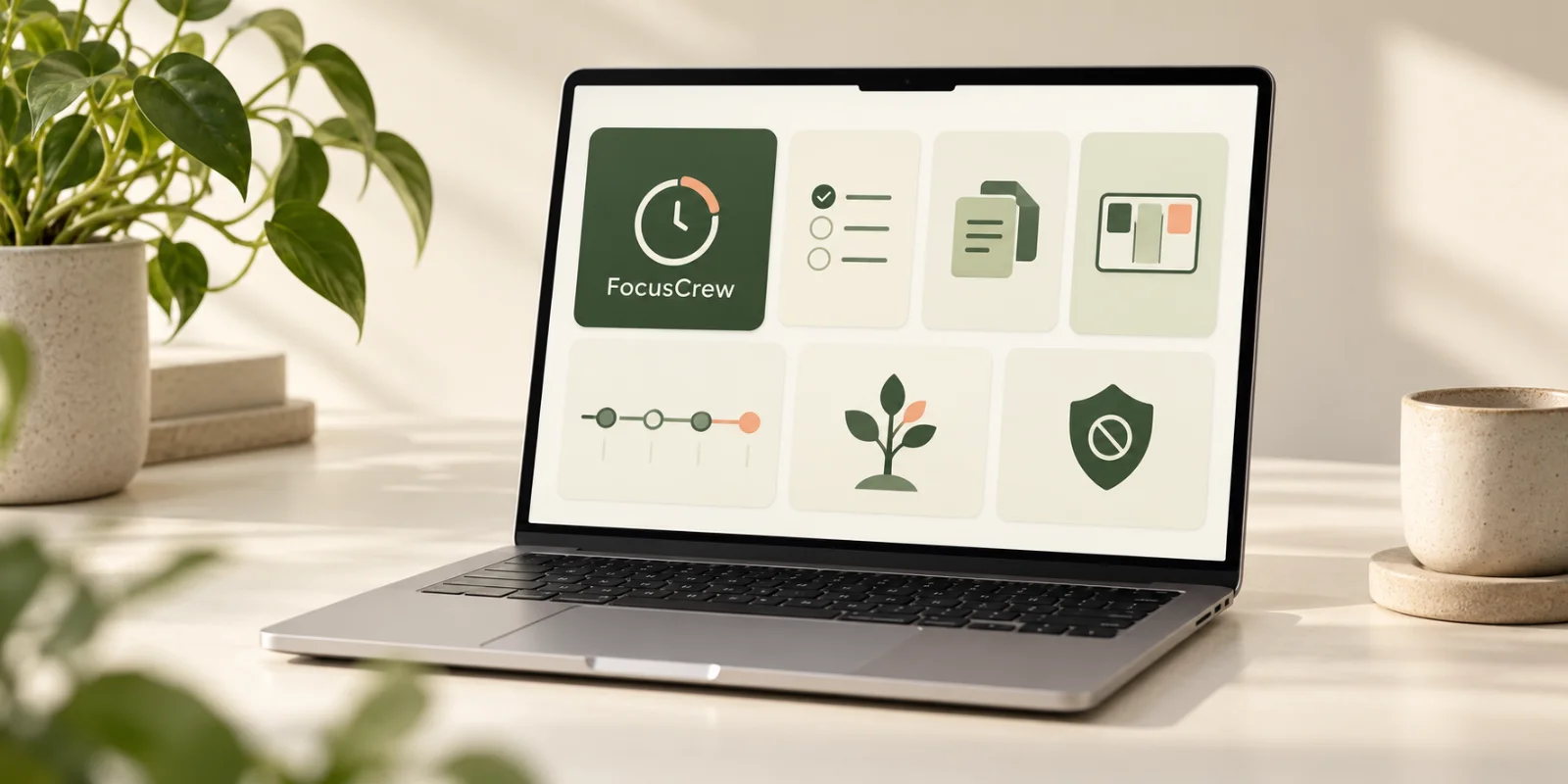
ADHDBody DoublingHabitsPlanningProductivity
7 Productivity Tools Compared: Which One Fits the Way You Work?
Sheida ·
Compare FocusCrew, Todoist, Notion, Trello, Asana, Forest, and Freedom to find the right support for planning, managing projects, reducing distractions, and getting started.
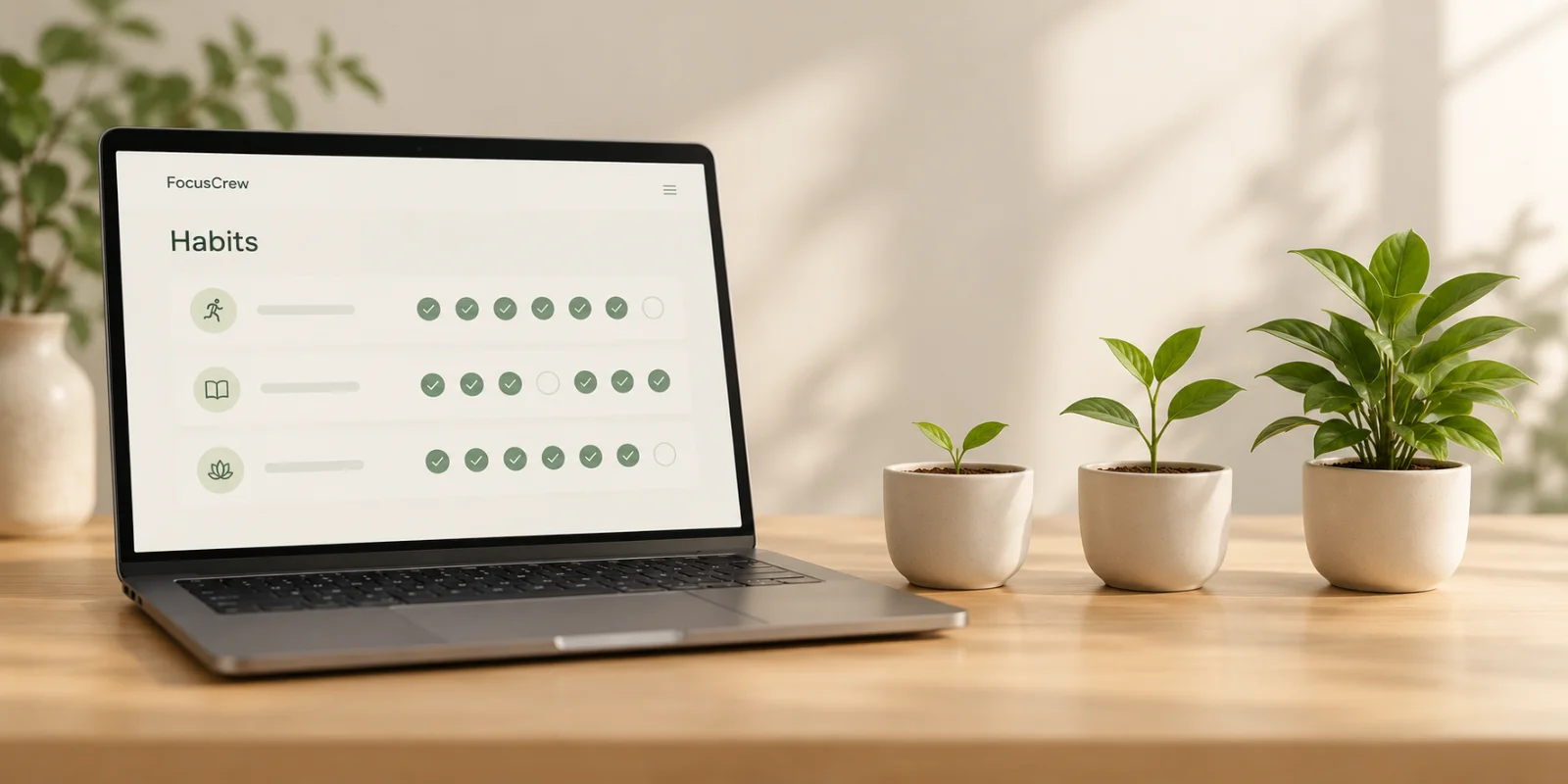
Small actions repeated over time shape how you live your values. Explore the science of habit formation and how FocusCrew can help you practise routines with consistency and room for imperfect days.
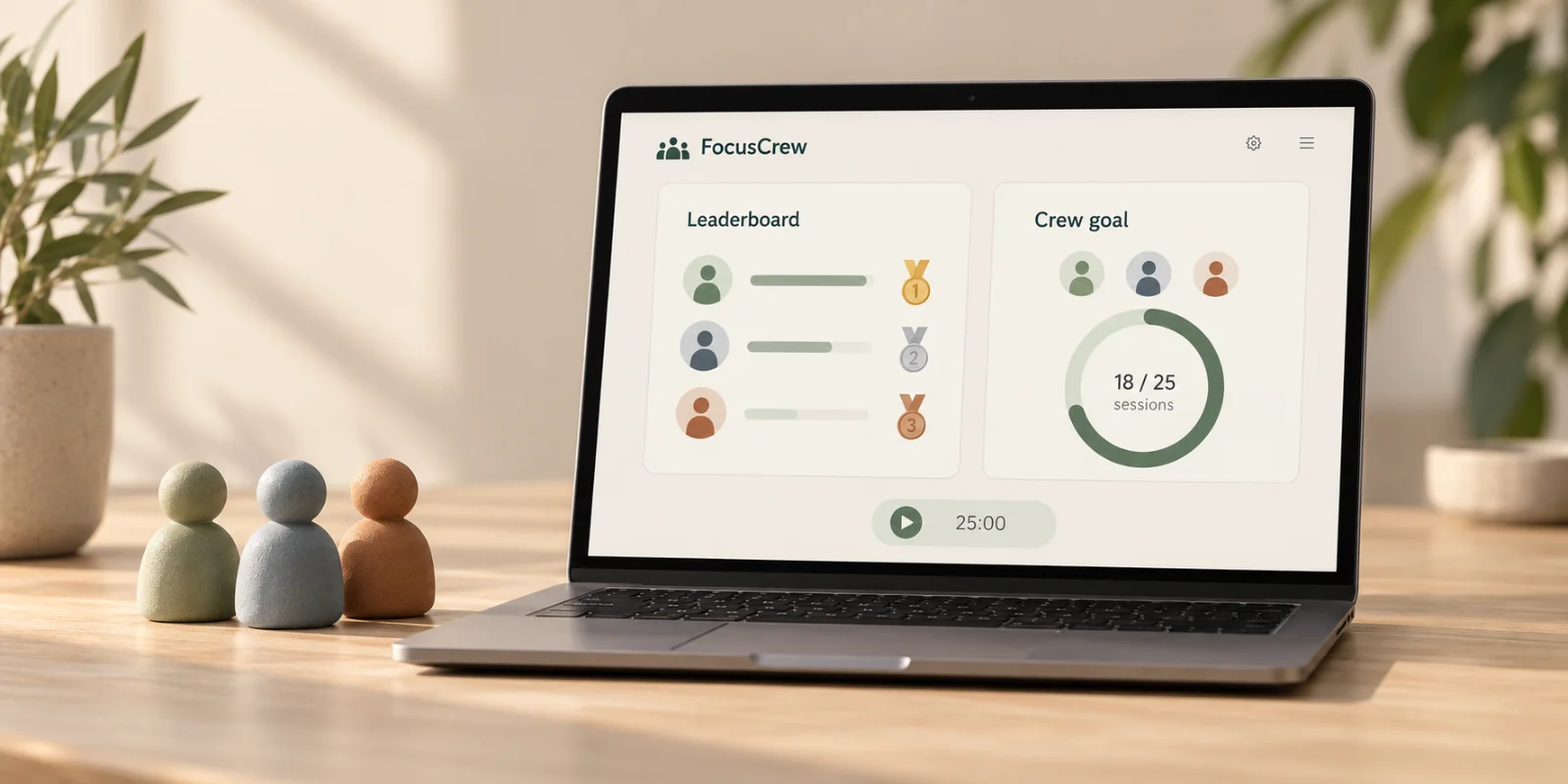
A little friendly competition can make focusing more engaging, while shared goals give every session a purpose beyond your own progress. Discover how FocusCrew brings leaderboards, crew challenges, and shared projects together.

Missing a day does not erase your progress. Learn how small habits, flexible routines, and FocusCrew’s habit tracker can help you return without guilt.

Want company while you work, without being on camera? Discover how FocusCrew combines camera-free body doubling with focus timers for quiet accountability.
Body DoublingHabitsPlanningProductivity
Meet FocusCrew: Plan Your Tasks, Build Habits, and Focus Together
Sheida ·
Your tasks, habits, projects, and focus sessions belong together. Explore how FocusCrew connects planning with doing, with a crew to work alongside.

Discover some of the best online body doubling apps in 2026, including FocusCrew, Focusmate, Flow Club, and Caveday, and learn which virtual coworking style may help you stay focused and get started more easily.

Learn how to study for long hours without burning out by using focused Pomodoro sessions, restorative breaks, better sleep, and study techniques that prioritize learning over time spent at your desk.

Struggling to start a task you keep putting off? Learn how to stop procrastinating with smaller first steps, specific plans, short Pomodoro sessions, and quiet accountability.

Struggling to focus when you don’t feel like working? Try smaller tasks, short Pomodoro sessions, intentional breaks, and quiet accountability to make getting started easier.

Body doubling means working alongside someone else to make starting and staying focused feel easier. Learn how it works, how to try it in person or online, and how to combine it with a focus timer.

Pomodoro gives you structure, while body doubling adds social accountability. Learn how combining focused timer sessions with working alongside others can make it easier to start tasks, stay focused, and build a consistent productivity routine.

Coding demands sustained concentration, but interruptions can quickly destroy momentum. Learn how programmers can use the Pomodoro Technique to structure coding sessions, reduce distractions, adapt session lengths, and stay focused without letting a timer dictate how they work.

Studying for hours without a clear structure can make it difficult to stay focused. Learn how to use a Pomodoro timer effectively, structure your study sessions, take better breaks, and use 25-minute focus blocks to make studying more manageable.
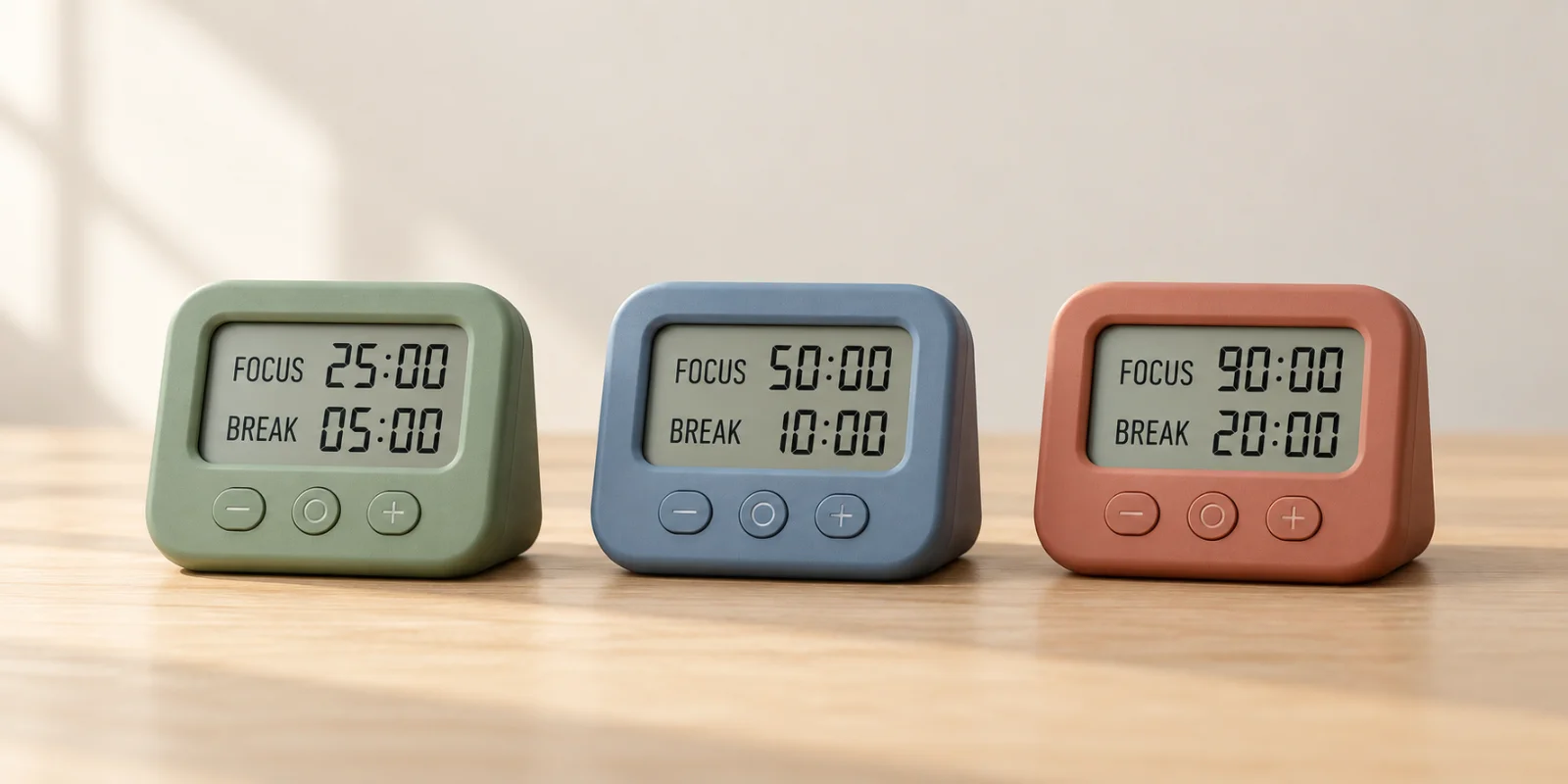
25/5 is the classic Pomodoro, but it is not the only option. Compare 25/5, 50/10, and 90/20 to find out which focus schedule fits different types of work, energy levels, and attention spans.
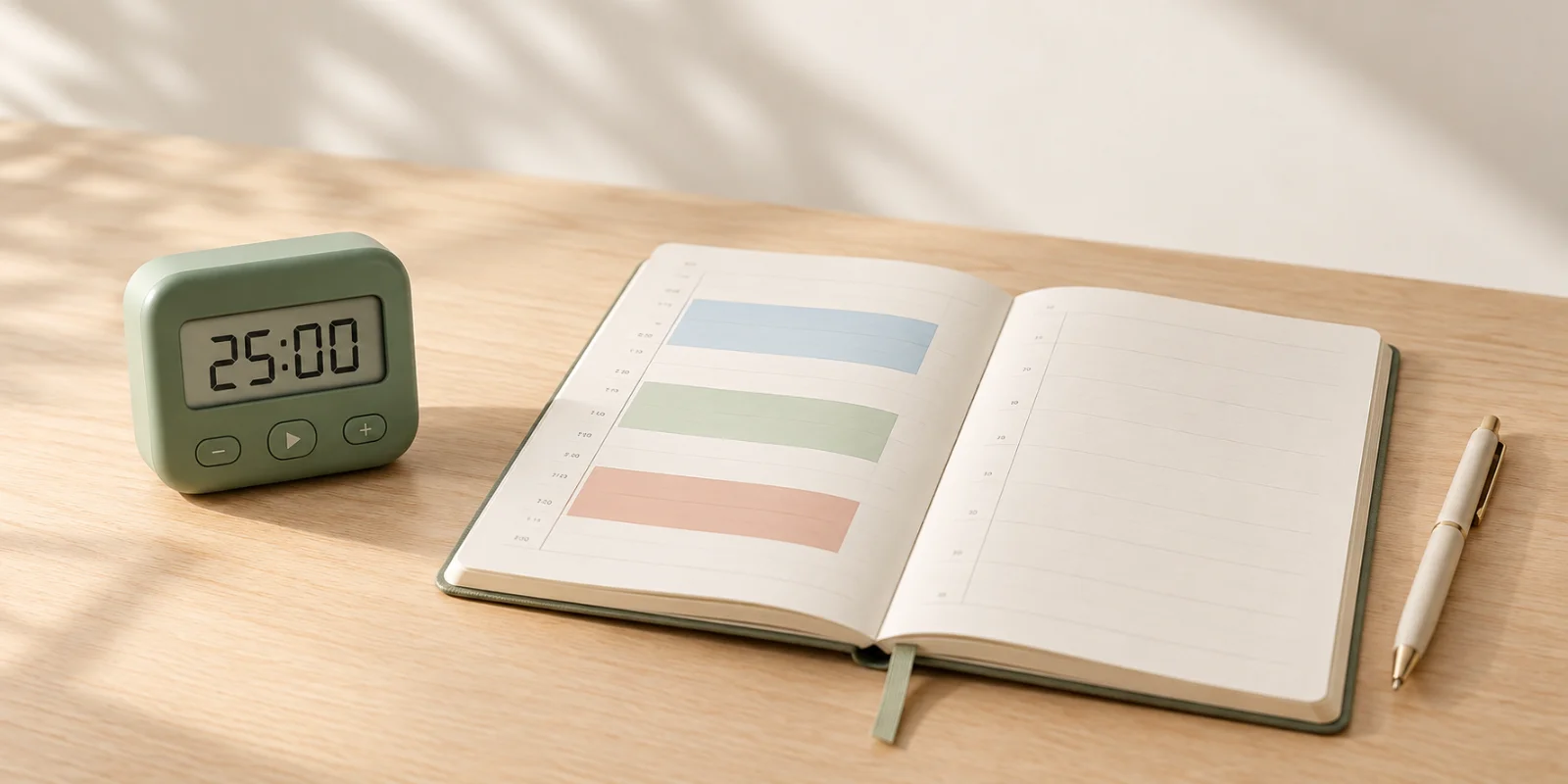
Pomodoro and Time Blocking solve different productivity problems. Learn how to combine structured schedules, focused work sessions, and social body doubling with FocusCrew to plan your day and make it easier to stay focused.