Best Personal Development App: Why Lifous Is Built for the Whole Person
Sheida ·
What makes a personal development app worth returning to?
A long feature list and a bold promise don't make a personal development app good. A good one helps you notice what matters, pick a next step, and come back to it in the middle of an ordinary week. Growth rarely happens in one burst of motivation. It usually takes a mix of reflection, planning, practice, and review, and what you need from each changes from one season of life to the next. Lifous is built around that wider view. It treats personal growth as more than a score to push up, and it links a check-in on your life with practical tools for goals, tasks, habits, focus, notes, and learning. No app can choose your priorities for you, and no product can promise to transform you. A useful app can make the path from intention to action clearer and easier to come back to, and that's a fair test to use when you compare tools.
Start with your life, not just your to-do list
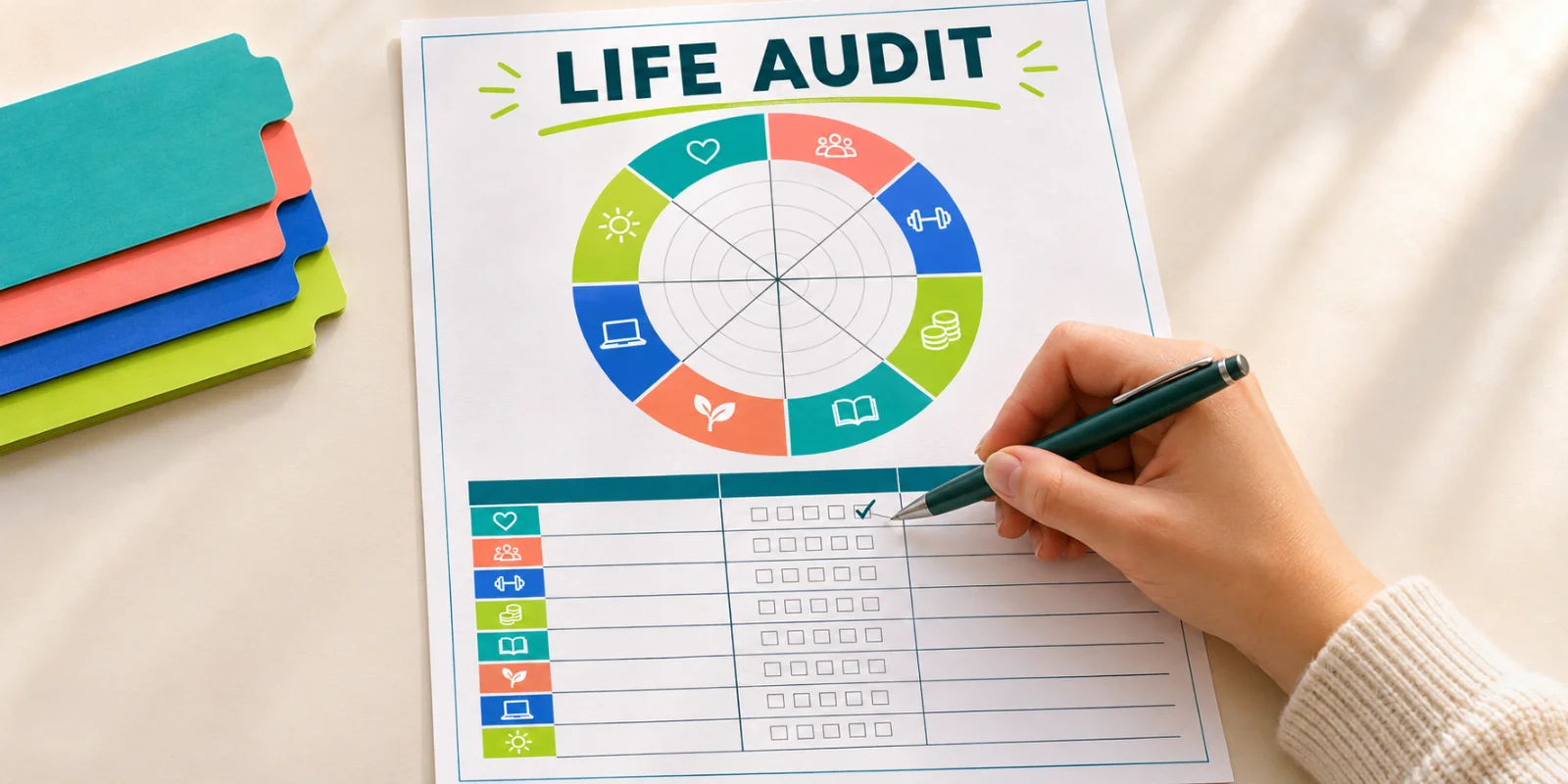
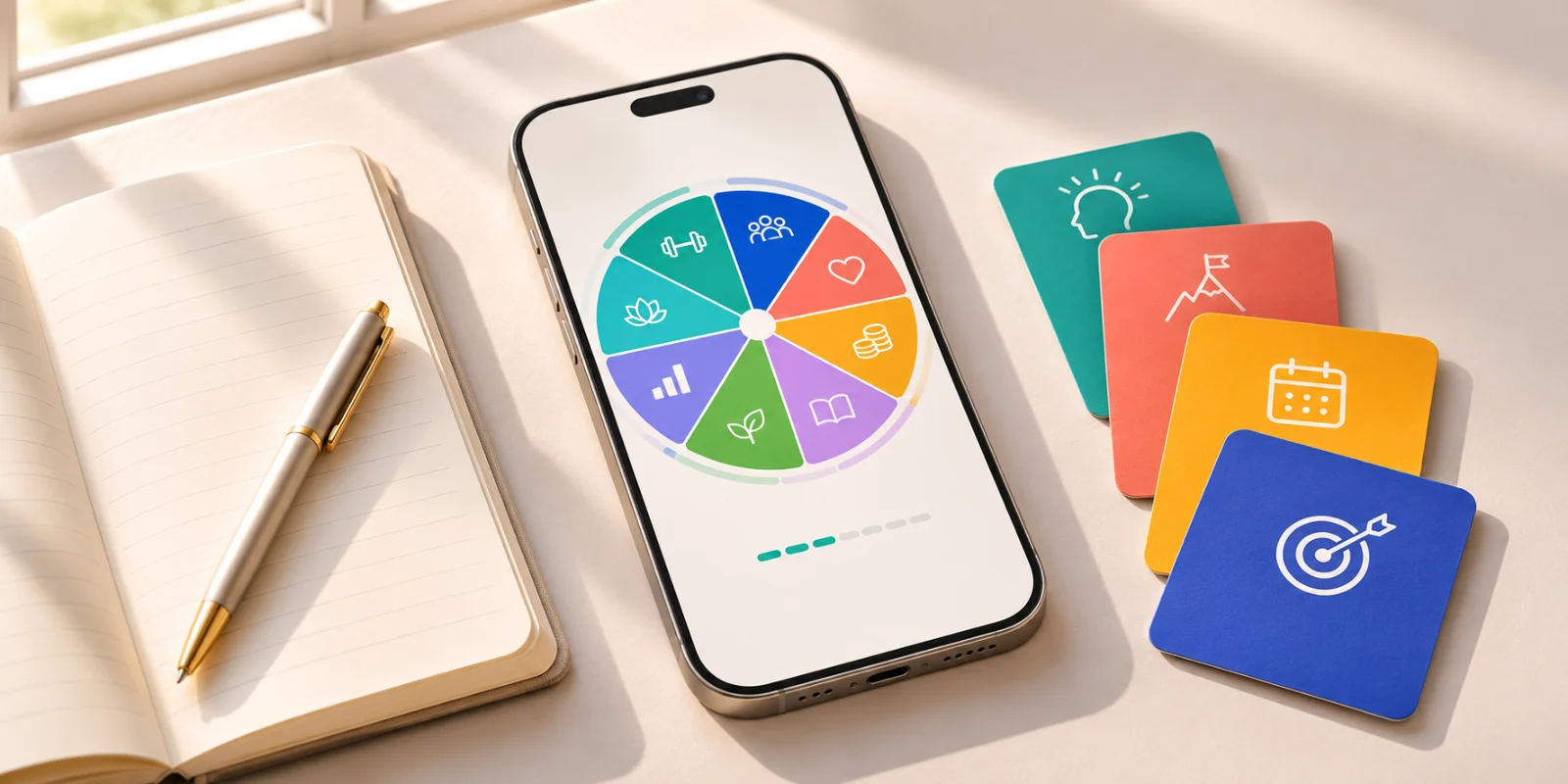
Most productivity tools start by asking what you need to get done. Personal development also asks what you want to make room for, and whether your attention is going to the things you care about. The Lifous Life Wheel lets you rate eight areas, including health, relationships, work, finances, personal growth, and recreation, and then offers optional questions and ideas for what to try next.[1] You can turn an idea into a habit, a to-do, a note, a project, or a flashcard, so it doesn't just sit there as a score on a chart. That's what links reflection to follow-through. The Wheel of Life guide explains how to use the exercise to get curious about your life without judging how well you're living it. You don't need every area to be perfect. Notice one area you want to support, and choose a manageable next move.
Connect your goals to concrete steps
A broad intention like "feel more confident" or "grow in my career" can matter a lot, but it's hard to act on until you decide what it means this week. Research on the self-concordance model links goals that fit a person's values and interests with more sustained effort, a better chance of reaching them, and better wellbeing.[2] Lifous makes that translation visible. You can set a vision for an area of your life, work on open goals, and break each goal into steps that show up as to-dos in the Planner.[1] The planning board, calendar, and Eisenhower matrix give you different ways to sort those steps and decide when to act. If you're shaping a goal right now, our article on setting personal goals you'll stick with walks through the process. Keep the goal tied to your own reasons, and make the next action small enough to fit your real schedule.
Build habits that can survive an imperfect week
Personal development depends less on a perfect streak than on coming back to a behaviour often enough that it becomes part of daily life. The Lifous habit tracker handles habits you're building or breaking, with goals, reminders, and trends, and it lets you skip a day to rest without losing your streak.[1] That flexibility matters, because missing a day is a normal part of any routine and tells you something useful. It doesn't mean you've failed. In a real-world habit study, repeating a behaviour in the same context helped it become more automatic over time, though the pace varied a lot from person to person, and missing a single opportunity didn't materially set back the process.[3] You might tie a short walk to finishing lunch, or a reading session to making tea. Start with a version you can repeat in a typical week, and adjust it when life changes. Our guide to building habits without guilt when you miss a day can help you get back on track without treating the tracker as a test of character.
Make room for reflection and self-understanding
Growth isn't only about doing more. It can also mean understanding what gives you energy, what drains it, and how your days are affecting you. Lifous combines free-form Notes with prompted journals for daily reflection, gratitude, evening check-ins, and weekly reviews, and you can record your mood with a journal entry and look back over the patterns.[1] Use a note to capture an idea, a journal prompt to sort through a hard day, or a weekly review to decide what needs your attention next. A meta-analysis of 138 studies found that interventions encouraging people to monitor their goals improved goal attainment on average, with stronger effects when progress was recorded or shared.[4] That supports a short, useful review. You don't need to measure yourself all the time. The weekly journal review shows how a short reflection can turn into a realistic plan for the week ahead. Keep your questions kind and specific: What helped? What got in the way? What's one adjustment I want to try?
Bring focus and learning into the same routine
Sometimes the gap between a personal goal and progress is just getting started. Lifous has a focus timer with work and break periods, ambient sounds, and a focus history, and your tasks and focus sessions live in the same workspace.[1] You can pick a task, start a session, and later see what you worked on, all without rebuilding your plan in another app. For a learning goal, flashcards with spaced review help you come back to material over time, and notes can hold explanations and questions you want to revisit.[1] These tools help when they support a goal you chose. They can't replace rest, teaching, or professional support when you need those. For more on how Lifous grew beyond its original focus timer and group sessions, read why FocusCrew became Lifous. We changed the name because the product's purpose grew: focus is still part of the toolkit, and the bigger aim now includes the life around the work.
Decide whether Lifous is the right fit for you
Whether an app works for your personal development depends on whether its approach matches how you want to grow. Lifous may suit you if you want whole-life reflection, goals, daily habits, focused work, notes, and reviews in one place. It may be less useful if you want a highly prescriptive coaching program, or a single-purpose tracker without planning or journaling. Lifous, formerly FocusCrew, puts these pieces together so that something you realize about yourself can become a goal, a small action, and a moment to check what you learned. The current pricing page lists a free plan with the core tools and paid plans that add more room for projects, notes, teams, or flashcards, so check it for the current limits before you choose.[1] Try one life area, one goal, and one repeatable action for a few weeks. Then ask whether the app helped you act on what matters to you.
References
- Lifous. Pricing and feature list. Accessed November 26, 2026.
- Sheldon, K. M., & Elliot, A. J. (1999). Goal striving, need satisfaction, and longitudinal well-being: The self-concordance model. Journal of Personality and Social Psychology, 76(3), 482–497. https://doi.org/10.1037/0022-3514.76.3.482
- Lally, P., van Jaarsveld, C. H. M., Potts, H. W. W., & Wardle, J. (2010). How are habits formed: Modelling habit formation in the real world. European Journal of Social Psychology, 40(6), 998–1009. https://doi.org/10.1002/ejsp.674
- Harkin, B., Webb, T. L., Chang, B. P. I., Prestwich, A., Conner, M., Kellar, I., Benn, Y., & Sheeran, P. (2016). Does monitoring goal progress promote goal attainment? A meta-analysis of the experimental evidence. Psychological Bulletin, 142(2), 198–229. https://doi.org/10.1037/bul0000025